

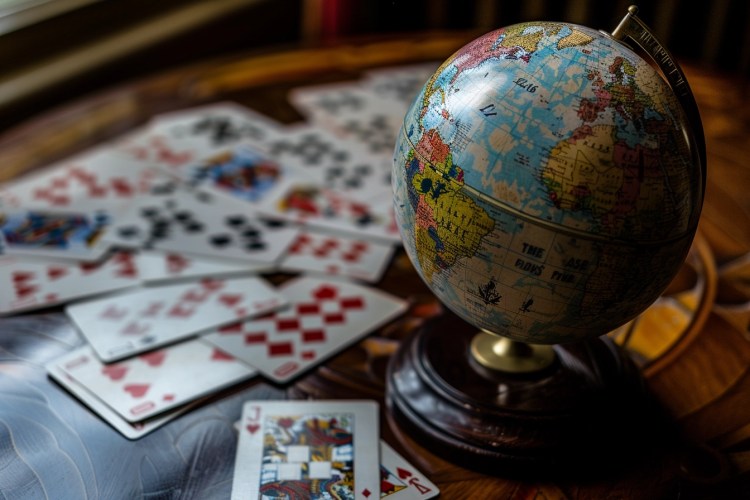
Card games have long been a cherished form of entertainment, weaving through diverse cultures and centuries to create a rich global tapestry of play, strategy, and social connection. These seemingly simple decks of paper conceal a world of history, innovation, and human interaction that continues to captivate millions today. This article delves into the fascinating origins, evolution, and compelling qualities of card games, revealing their timeless allure and cultural significance.
The Ancient Origins of Playing Cards
The exact beginnings of playing cards remain shrouded in mystery, but the most widely accepted theory attributes their origin to China during the Tang Dynasty, around the 9th century AD. Early references describe a game called the “leaf” game, believed to employ paper cards or pages from books, possibly as play money for gambling games. These cards laid the groundwork for later uses in gaming and social interaction.
By the 11th century, playing cards had found their way west into Egypt, where surviving cards dating back to the 12th and 13th centuries already feature four suits and a structure recognizable to modern players.
The migration of playing cards into Europe occurred in the late 14th century, with early records showing cities such as Bern and Florence imposing bans on card playing—an indication of their growing popularity and social impact. Manuscripts from the era highlight the gambling concerns and moral debates surrounding these new forms of leisure.
The Evolution of Card Suits and Design
Early playing cards varied widely in suit symbols. Middle Eastern cards featured polo-sticks, coins, swords, and cups—motifs still found in Latin decks today. As cards spread northward into Germanic regions, suits transformed into leaves, hearts, bells, and acorns, reflecting rural life.
By the 15th century, the French revolutionized card designs, introducing the suits نclubs (trèfles), diamonds (carreaux), hearts (cœurs), and spades (piques) that became standardized internationally. The simple, two-color scheme red and black, optimized production and readability, greatly aiding in the mass production of decks.
Court cards also evolved, replacing generic figures with depictions of royalty—kings, queens, and knaves (or jacks). Over time, innovative additions like corner indices (numbers in corners for easier holding) and reversible face cards enhanced usability and longevity.
Card Games Across Cultures
While the 52-card standard deck dominates globally, many cultures have developed unique variants and traditions:
-
India: Traditional card games like Ganjifa used circular cards with ornate designs and intricate rules blending play and ritual. Modern games such as Teen Patti continue to enjoy widespread popularity.
-
Japan: Hanafuda decks with floral and seasonal imagery serve as the basis for games requiring matching and set formation.
-
Europe and America: Poker, bridge, rummy, and solitaire are among the most enduring games, shaping social and competitive gaming milieus.
These cultural adaptations reveal the versatility of card games as both pastime and social instrument.
The Appeal of Card Games
Card games balance chance and skill, offering players varied degrees of control and excitement. Their enduring appeal includes several key facets:
-
Strategic Depth: Games like poker and bridge challenge the mind and reward careful thought.
-
Social Interaction: Card tables are traditional hubs of communal enjoyment and competition.
-
Accessibility: Cards require minimal equipment and can be enjoyed by players of all ages and abilities.
-
Versatility: From solitary solitaire games to bustling multiplayer tournaments, cards adapt to any context.
-
Cultural Resonance: Cards carry symbolic meanings and histories deepening their significance beyond play.
The Digital Age: Card Games in a New Light
Technological advances have brought card games into virtual realms. Online platforms and mobile apps offer expansive libraries of classic and modern card games, drawing global communities into tournaments and casual play alike. These platforms feature:
-
Real-time multiplayer action and live streaming.
-
Tutorials and adaptive difficulty for beginners.
-
Social features fostering friendships and competition.
-
Cross-platform accessibility enabling gaming from anywhere.
Digital adaptation extends the life and reach of card games, ensuring their place in contemporary culture.
Conclusion
Card games embody a unique blend of history, culture, and human connection. Emerging from mysterious ancient origins, refined through centuries of artistic and social innovation, they have sustained their popularity through their strategic complexity, social richness, and sheer entertainment value.